

Your own design partner

Someone who prototypes designs systems builds UI thinks UX gets business

Someone who cares.

Hi! My name is Ivelin Belchev and I provide product design, design systems, and rapid prototyping for businesses that need experienced help without hiring full-time.

Your bridge between business, design, and engineering – available as a fractional partner, embedded support, or focused project engagement.

How I help

I know where digital products often struggle.

I've seen it. I've been solving common (and uncommon) design problems for 20+ years.

You may have an engineering team and a roadmap but no senior designer to steer UX and shape workflows. Or design is decoupled from development so a lot gets lost in translation.

Sometimes the product outgrows its interface and everything becomes inconsistent. New features take a while to design and different screens solve the same problems differently.

Or you may have an idea that needs validation before more resources are committed to building it.

That’s where I usually come in.

I work with product and engineering teams to identify the actual problems.

I propose clear product direction and carry that thinking through UX, interface design, prototyping and working frontend.

I can join for a focused project, work alongside your team for a period of time, or stay involved as an ongoing fractional design partner.

I’m particularly useful when you need to:

  • untangle a complex workflow or product area
  • turn an idea into something realistic and testable
  • bring consistency to a growing product or design system
  • give developers clearer, implementation-ready design
  • bridge gaps between product, design and engineering
  • add senior design capacity without hiring full-time

Let's talk

Understand & design

  • Product design
  • UX
  • workflows
  • dashboards
  • internal tools

Prototype & build

  • Interactive prototypes
  • Vue
  • React
  • HTML/CSS
  • JS
  • Django
  • PHP
  • APIs
  • custom components

Make it scalable

  • Design systems
  • component libraries
  • AI workflows
  • Figma

Selected work

A few examples of problems I've helped untangle - from complex operational workflows to living design systems, UX, code-based prototypes and end-to-end production UI.

EvoBitsIT

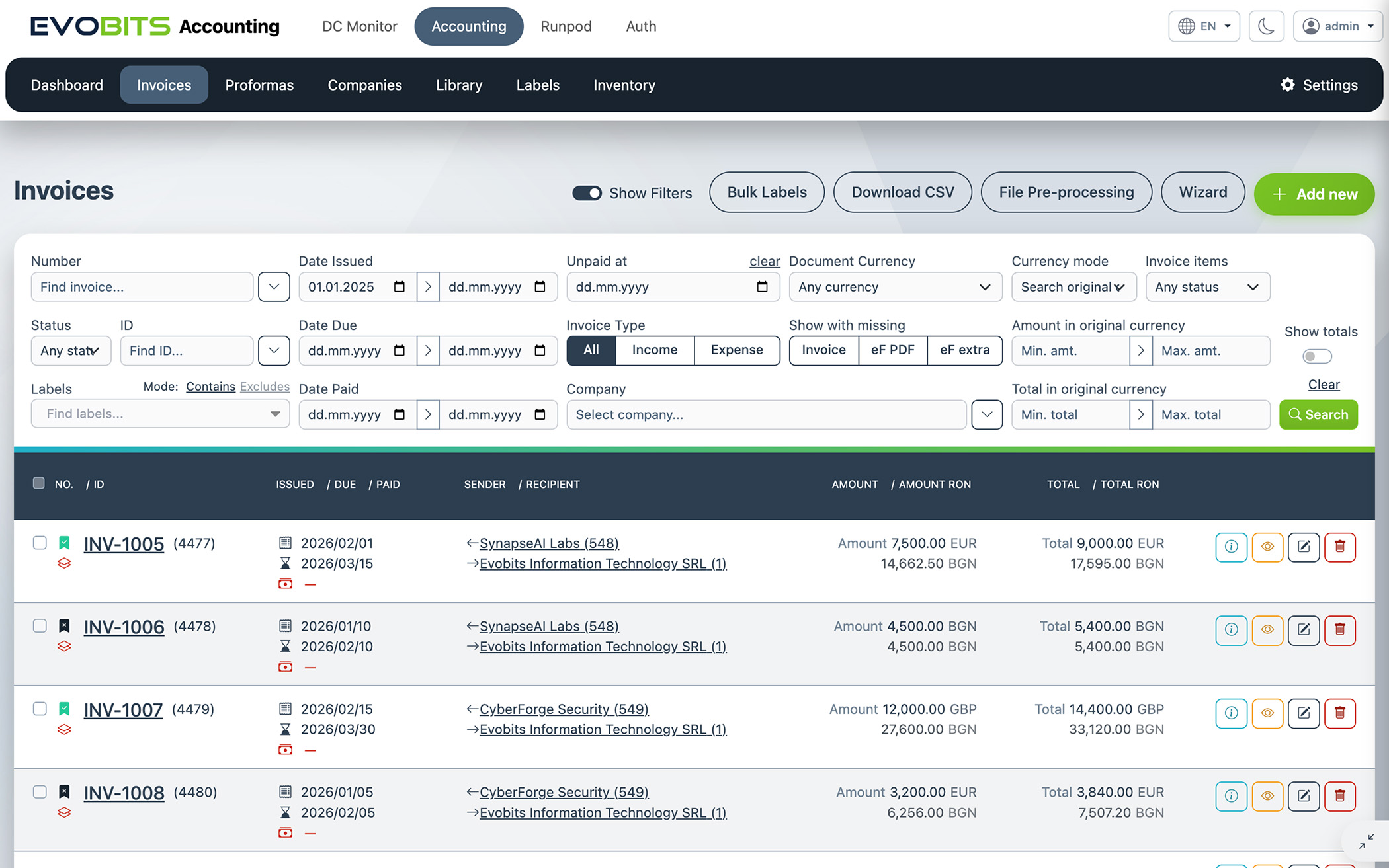
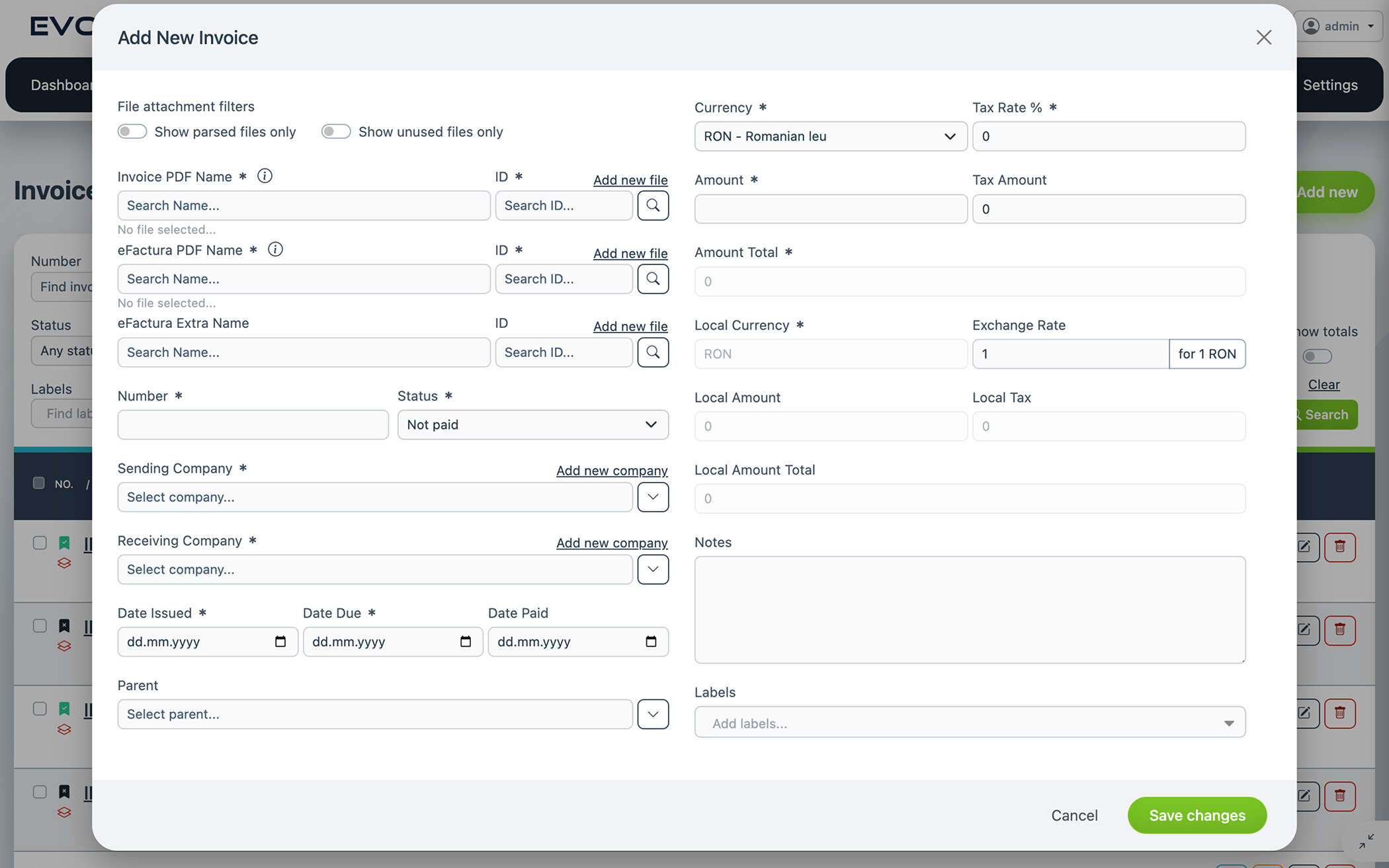
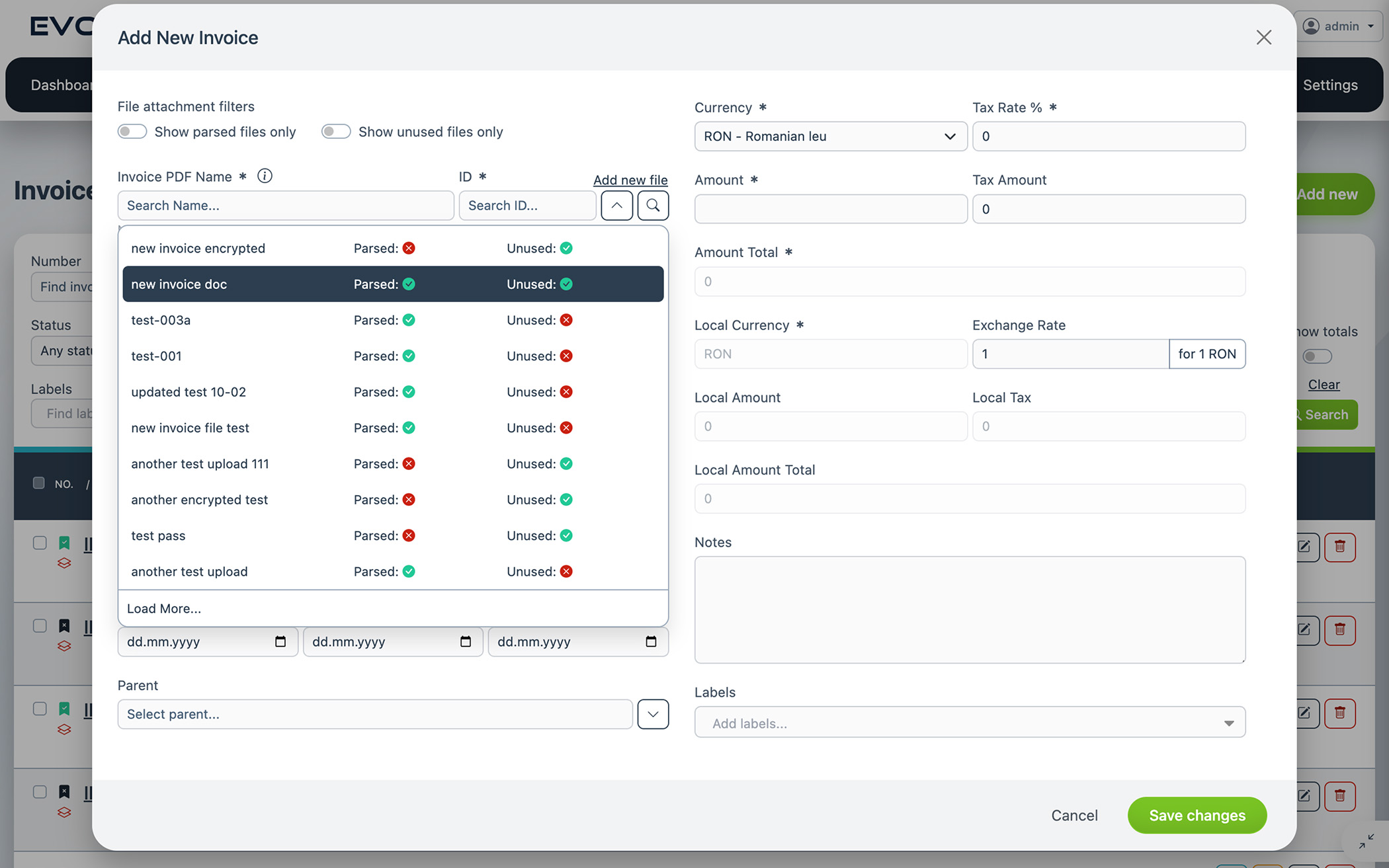
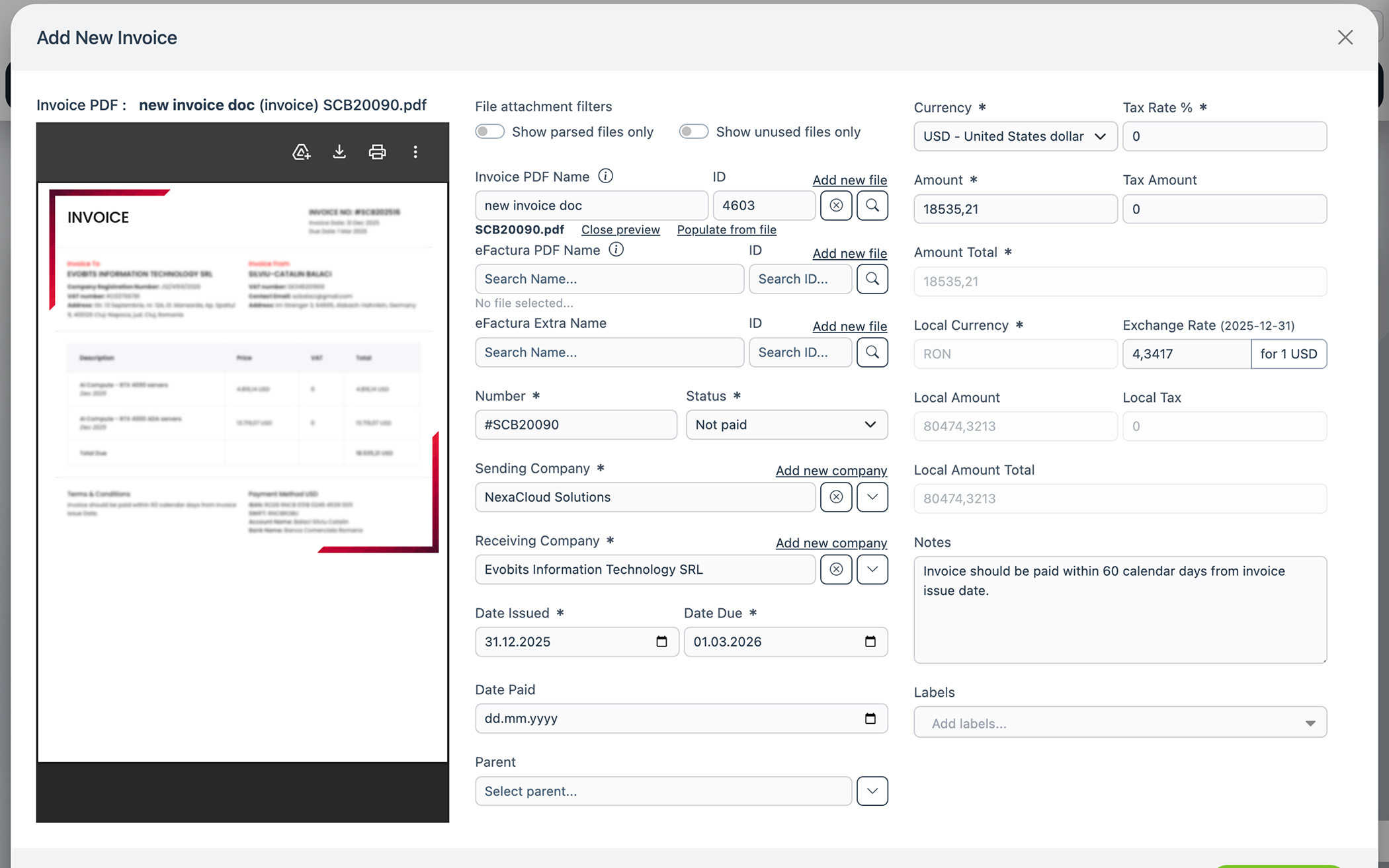
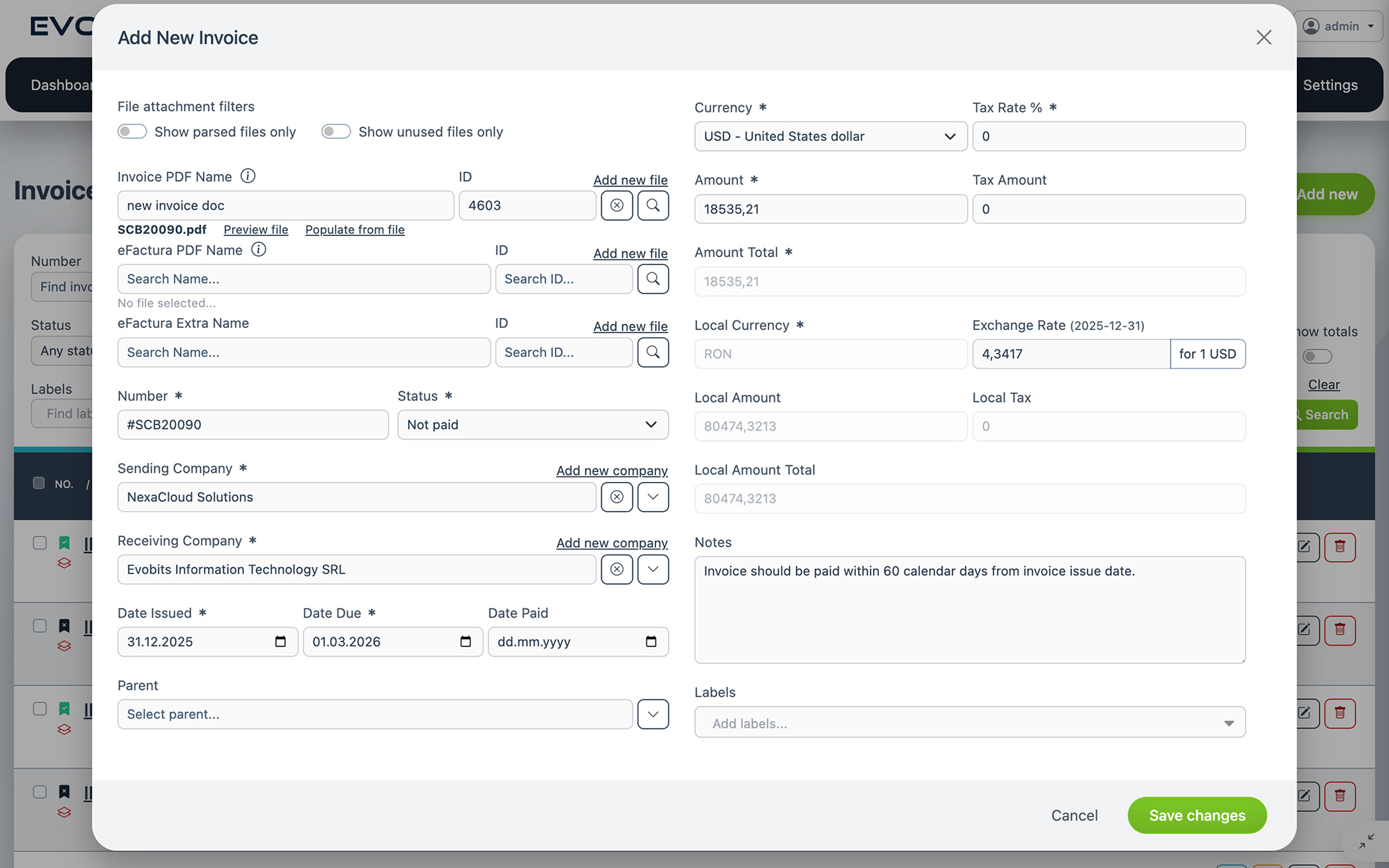
Accounting — Add invoice

The responsive invoice list offers powerful filters, bulk actions and multiple ways to add new documents.

1 / 5

Making a dense accounting workflow easier to navigate, without taking away the power experienced users need.

The accounting suite brings document entry, filtering, bulk operations and day-to-day document management into one responsive workspace.

Ongoing embedded partnership · Product design & design engineering · 2018 — present

I work across both product design and implementation, which means decisions can move directly from workflow and interface design into working UI without an extra handoff.

Across the wider product suite I have:

  • designed and delivered internal applications from workflow to production UI
  • built and maintained shared patterns and a reusable design system
  • standardized frontend architecture across 10+ applications
  • worked directly on Vue and Django-based products alongside backend engineers
  • introduced AI-assisted workflows for prototyping, development and internal processes

Logytext / TruckRates

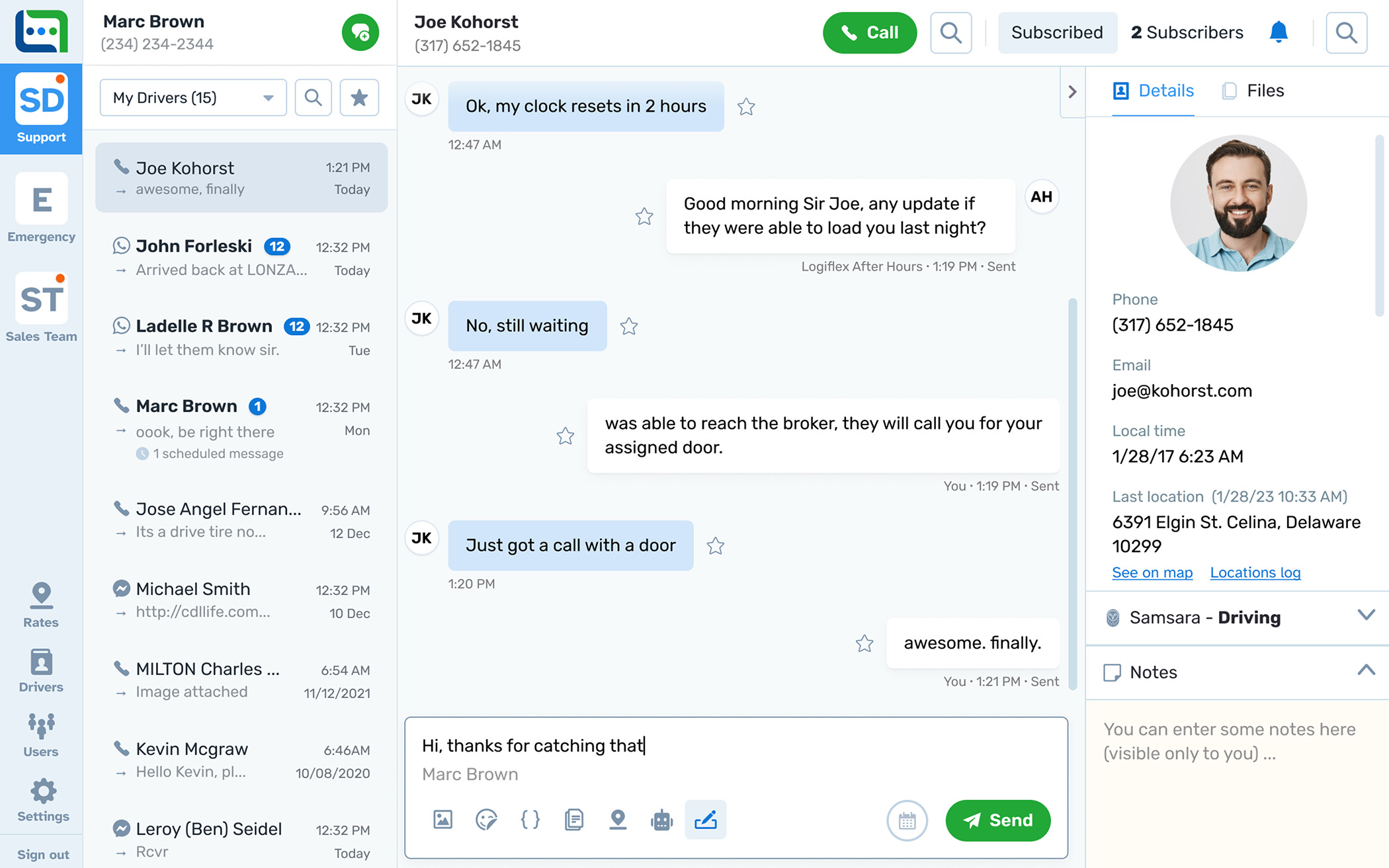
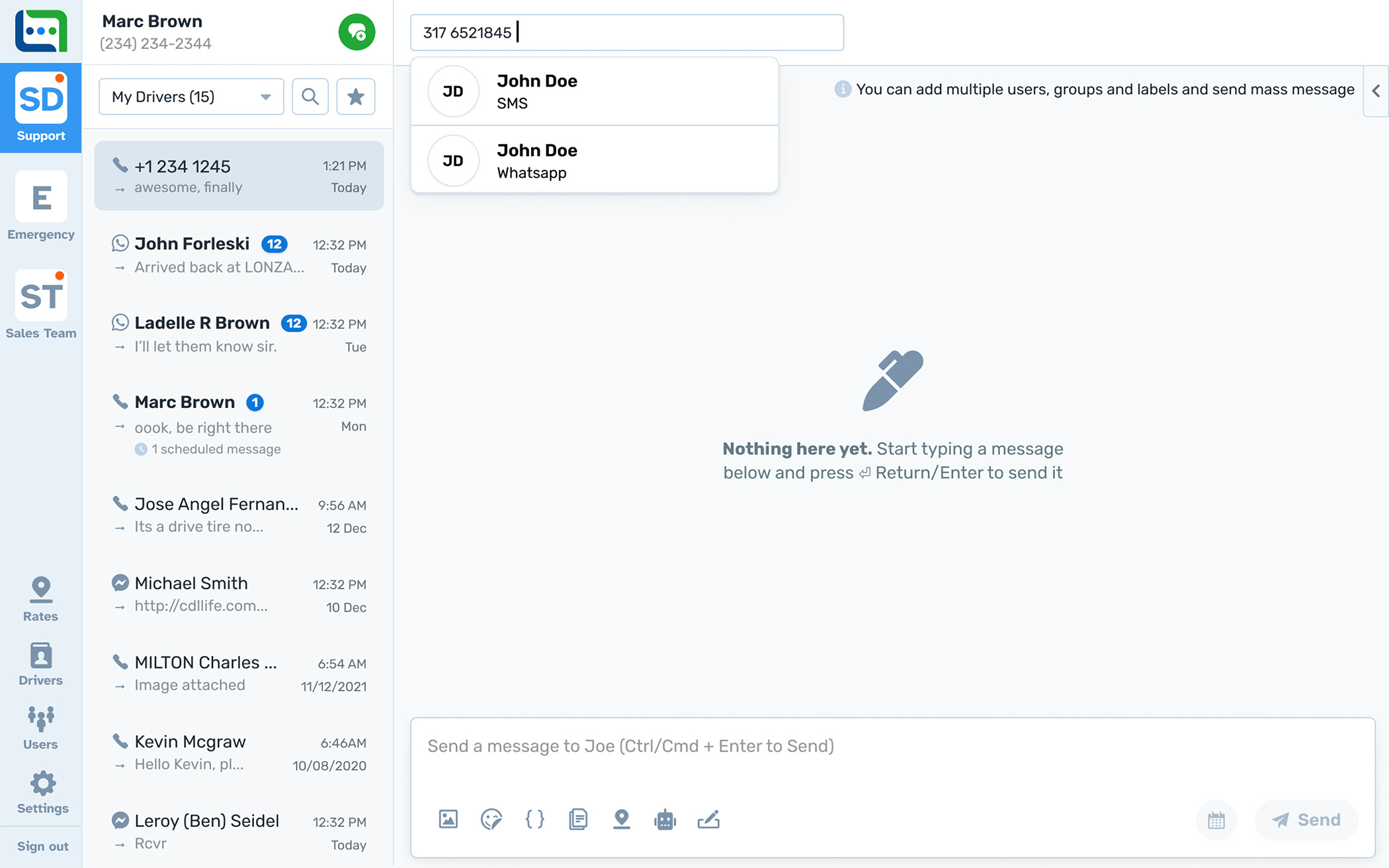
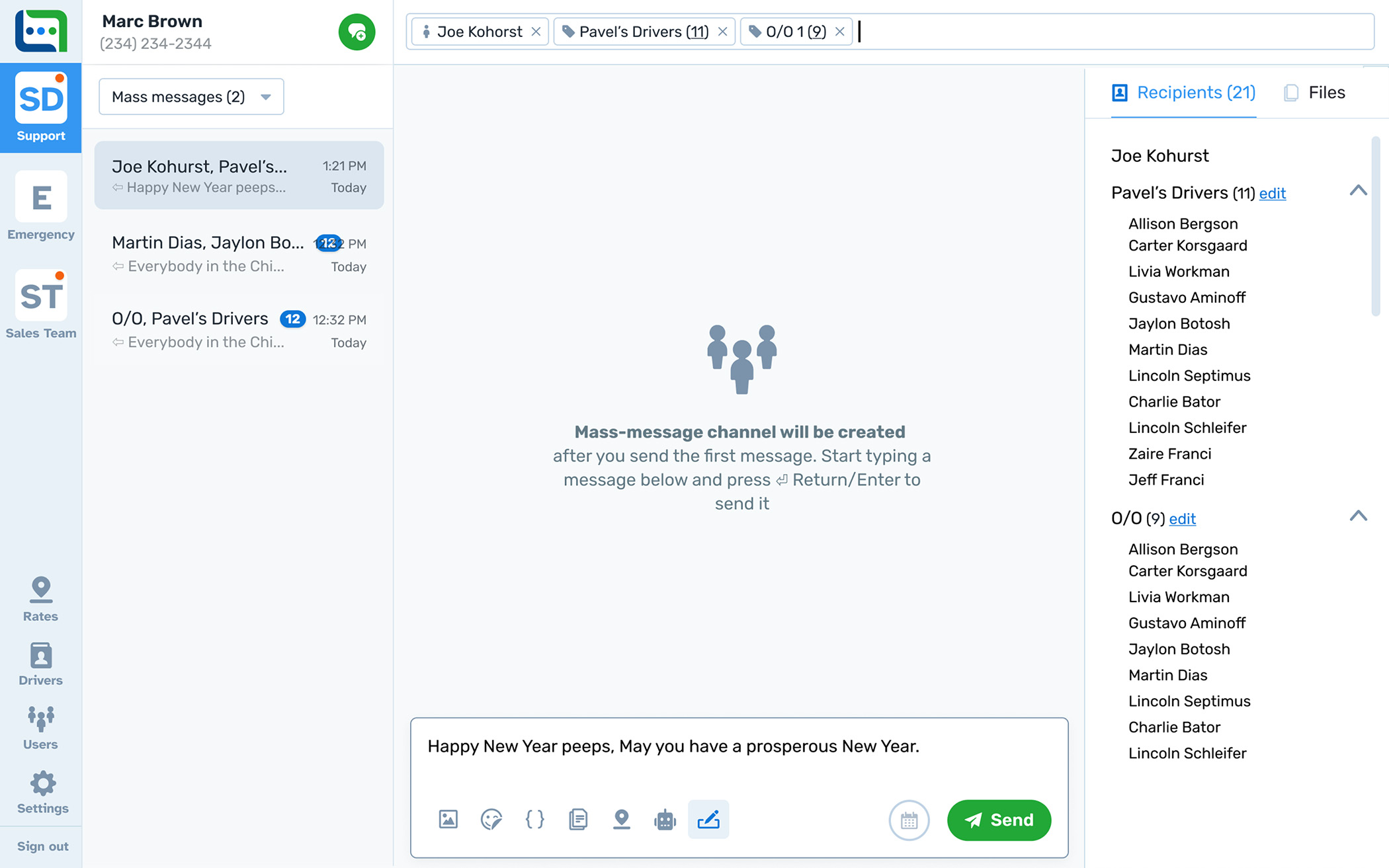
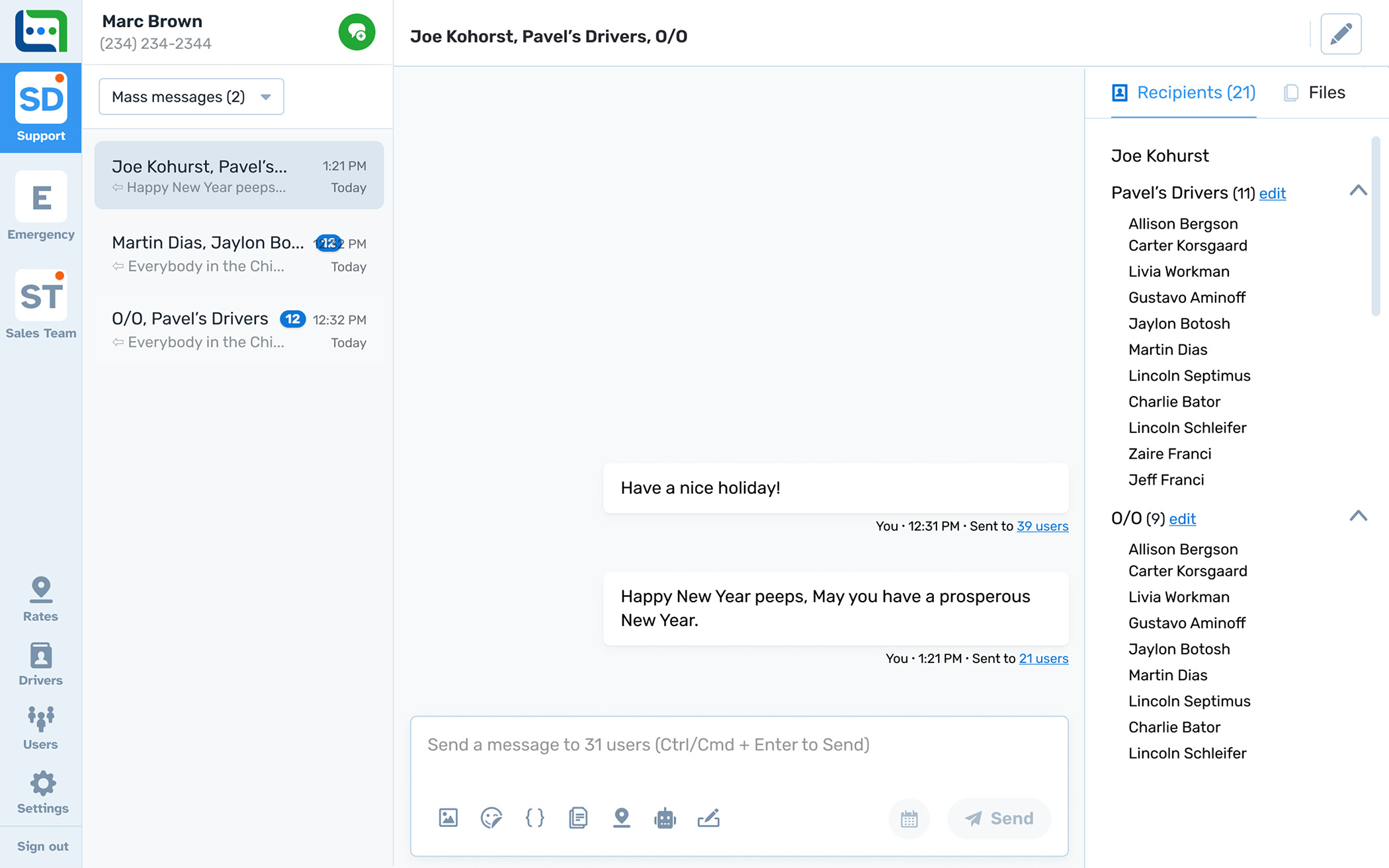
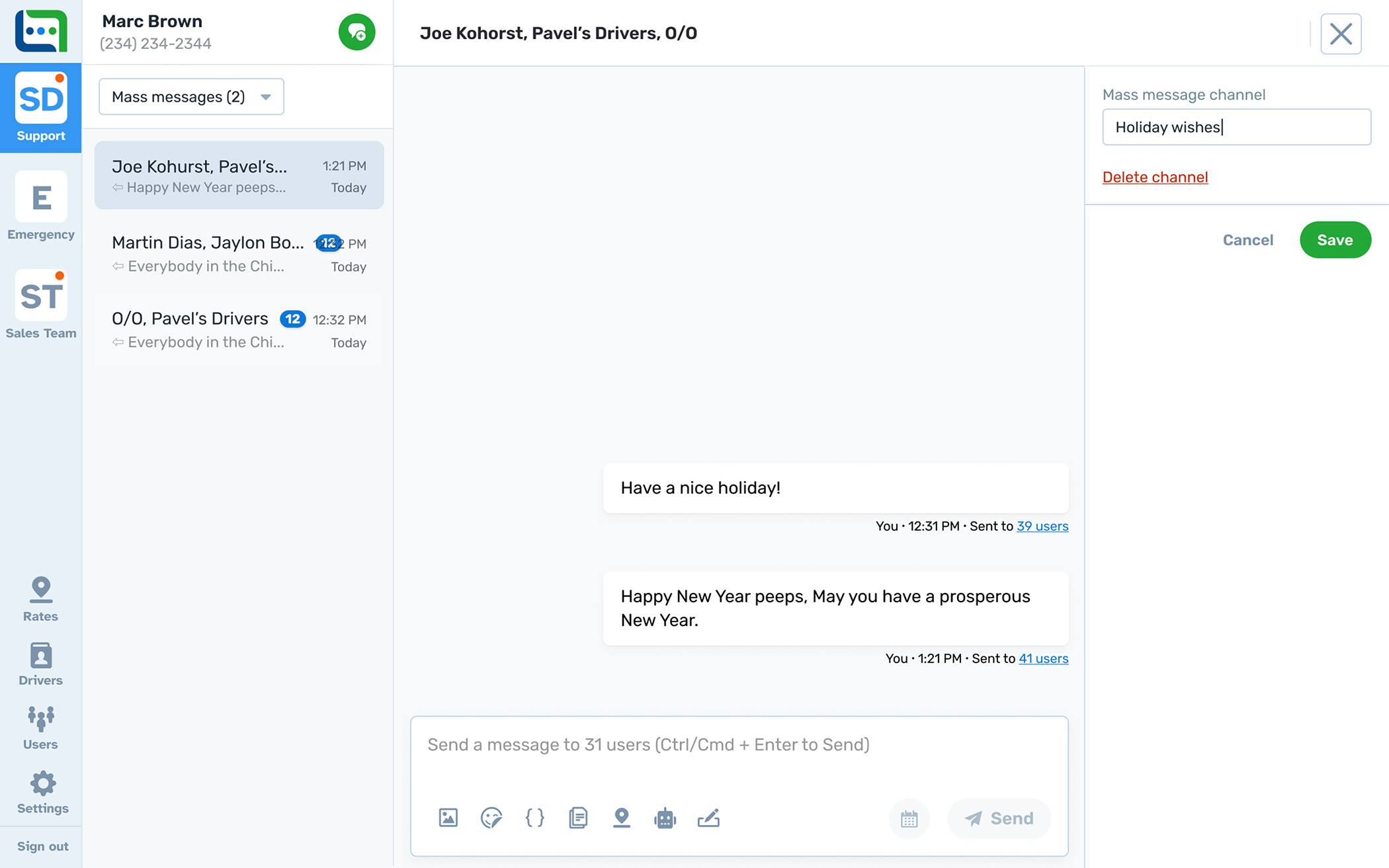
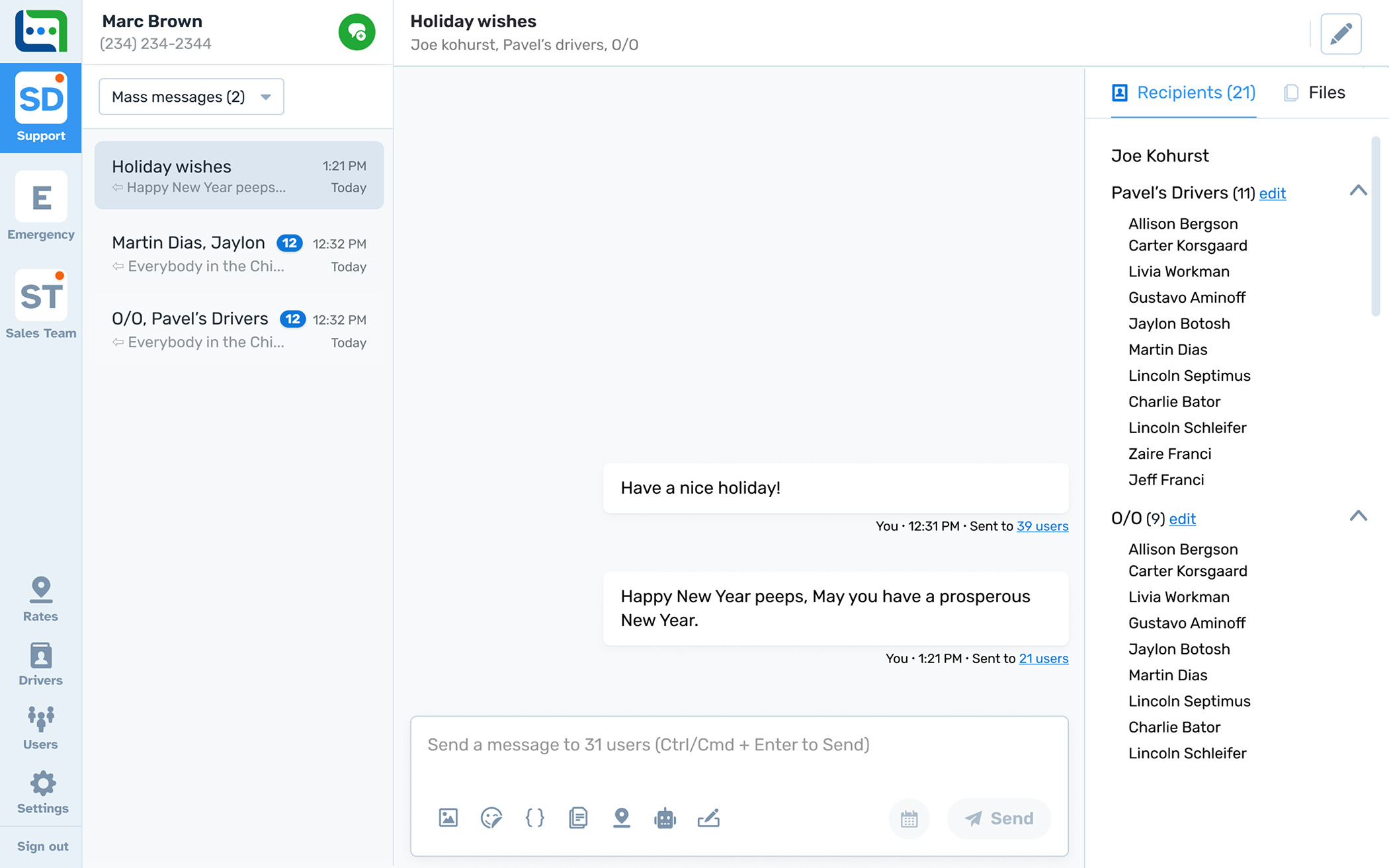
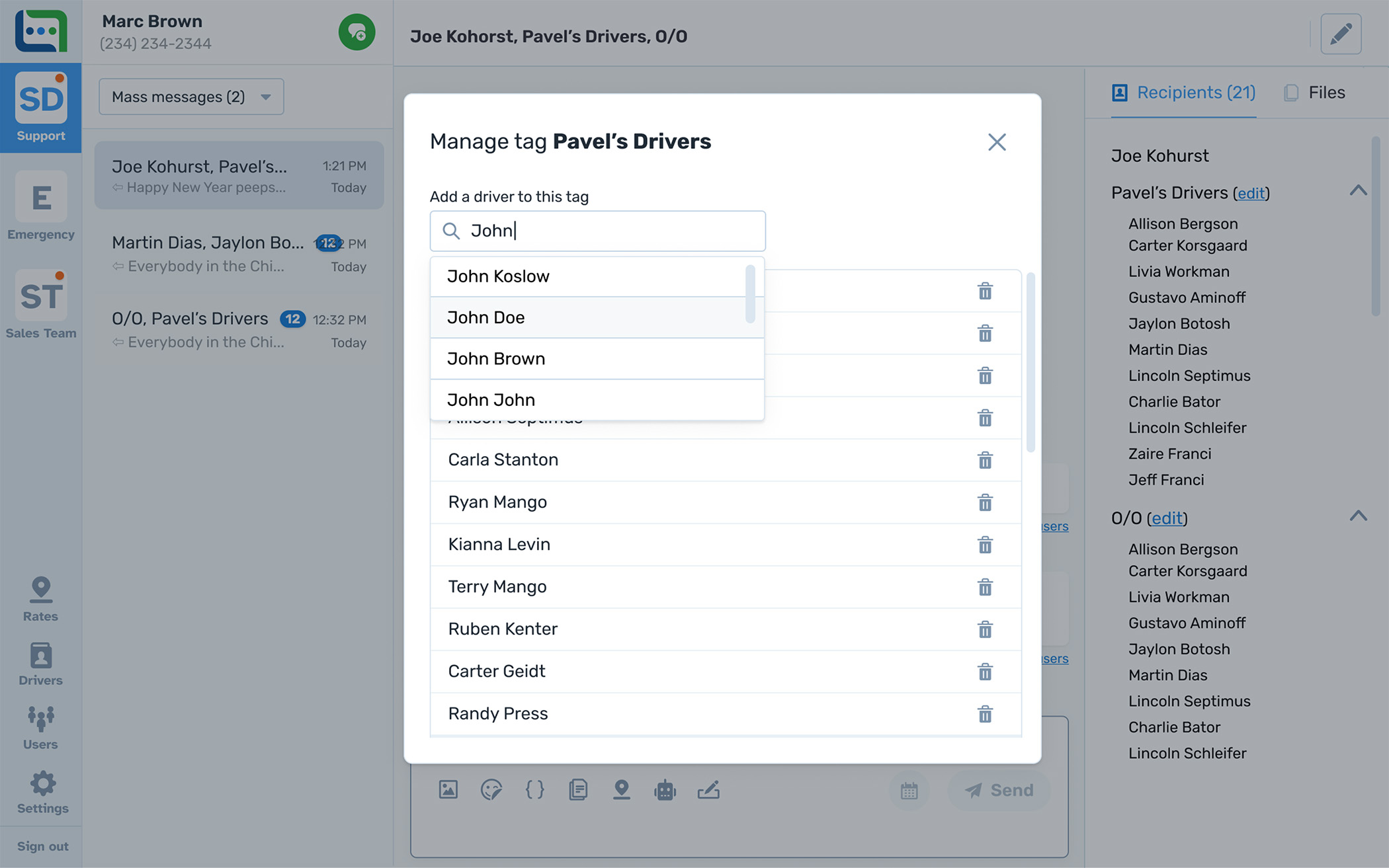
Logytext — Mass Message

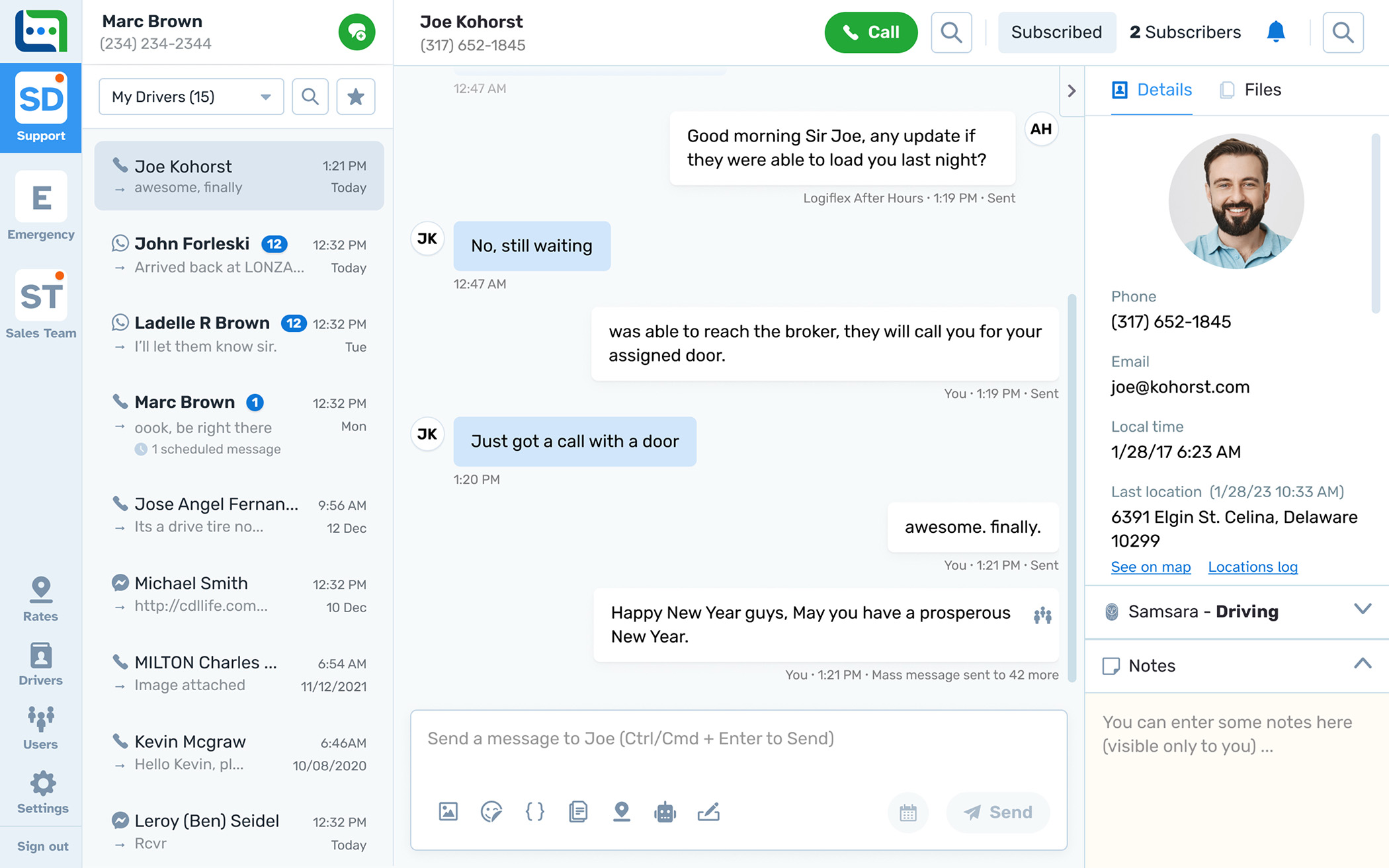
The regular conversation view — the dispatcher's starting point, with the driver list, open thread, and contact details panel all in one place.

1 / 8

Helping dispatchers communicate with many drivers without losing the context of individual conversations.

The interface brings driver lists, active conversations and contact information together into one operational workspace, then extends the same interaction model to larger communication tasks.

Fractional product design partner · 2021 — 2024

This was part of a long-term SaaS engagement where I worked on complex, multi-role workflows rather than isolated screens.

My work included:

  • defining and standardizing interaction patterns across the product
  • evolving a design system used across hundreds of screens
  • maintaining a large Figma component library as the product grew
  • adapting complex desktop workflows for smaller screens
  • working with the product team as requirements and business priorities changed

Logytext / TruckRates

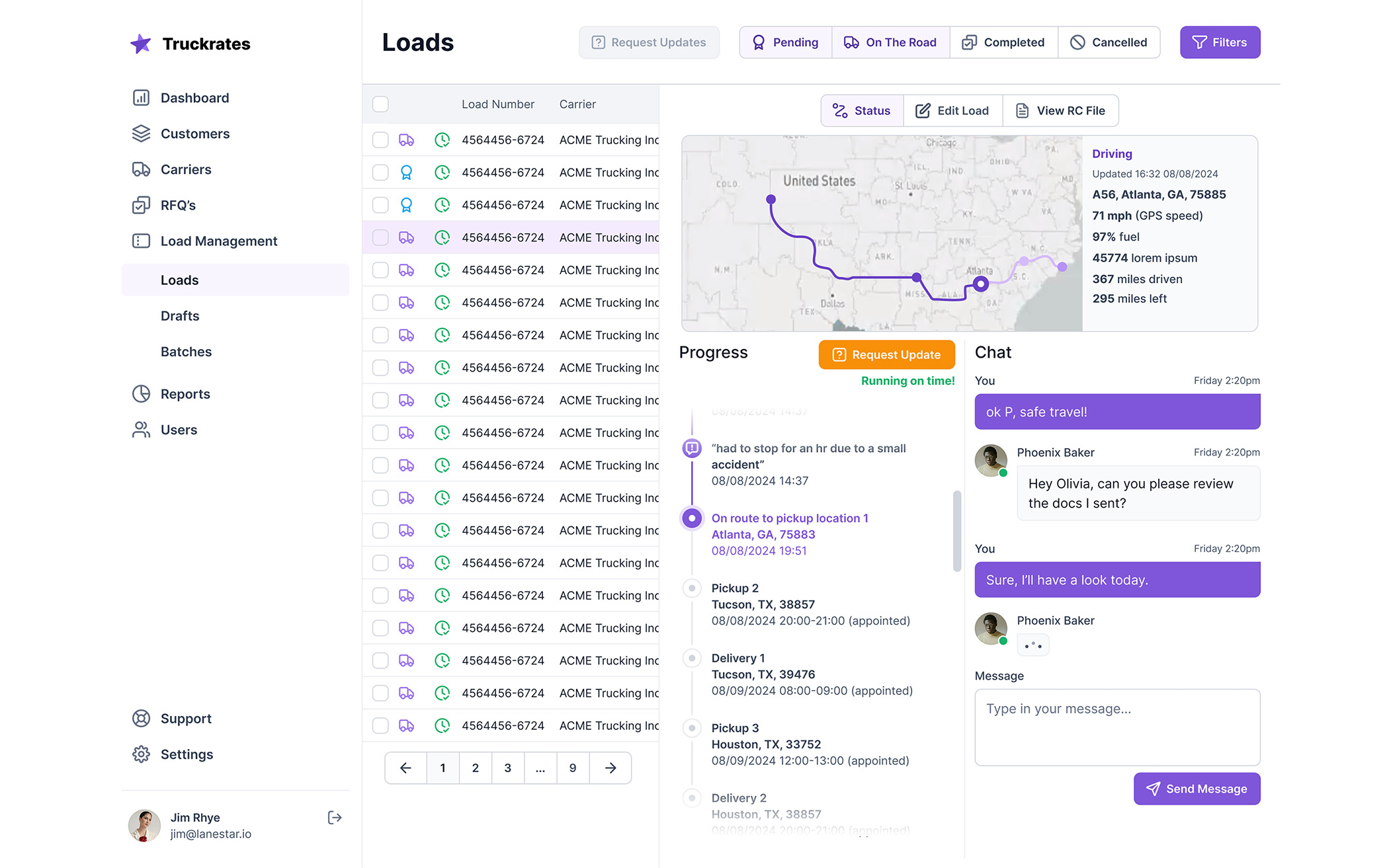
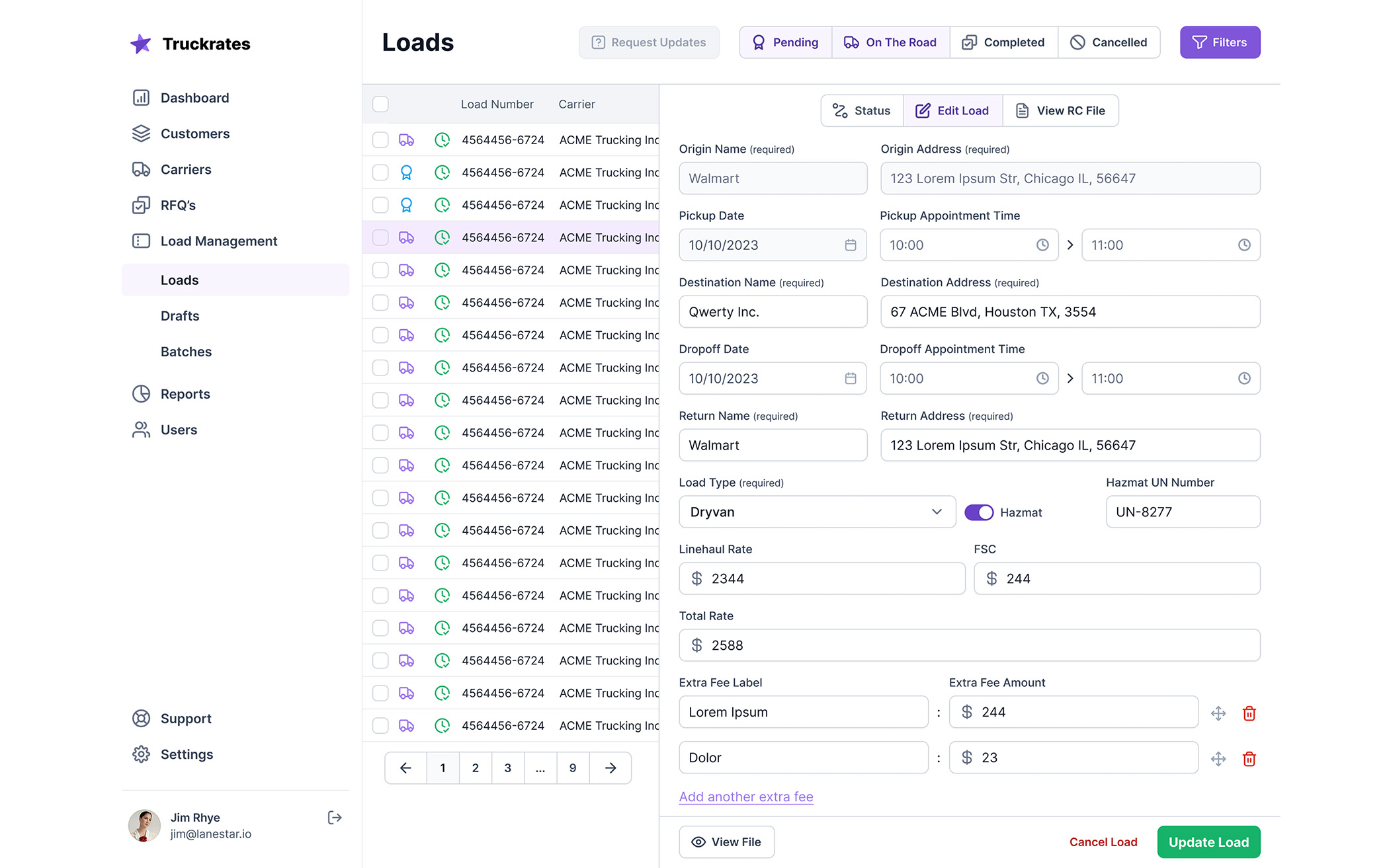
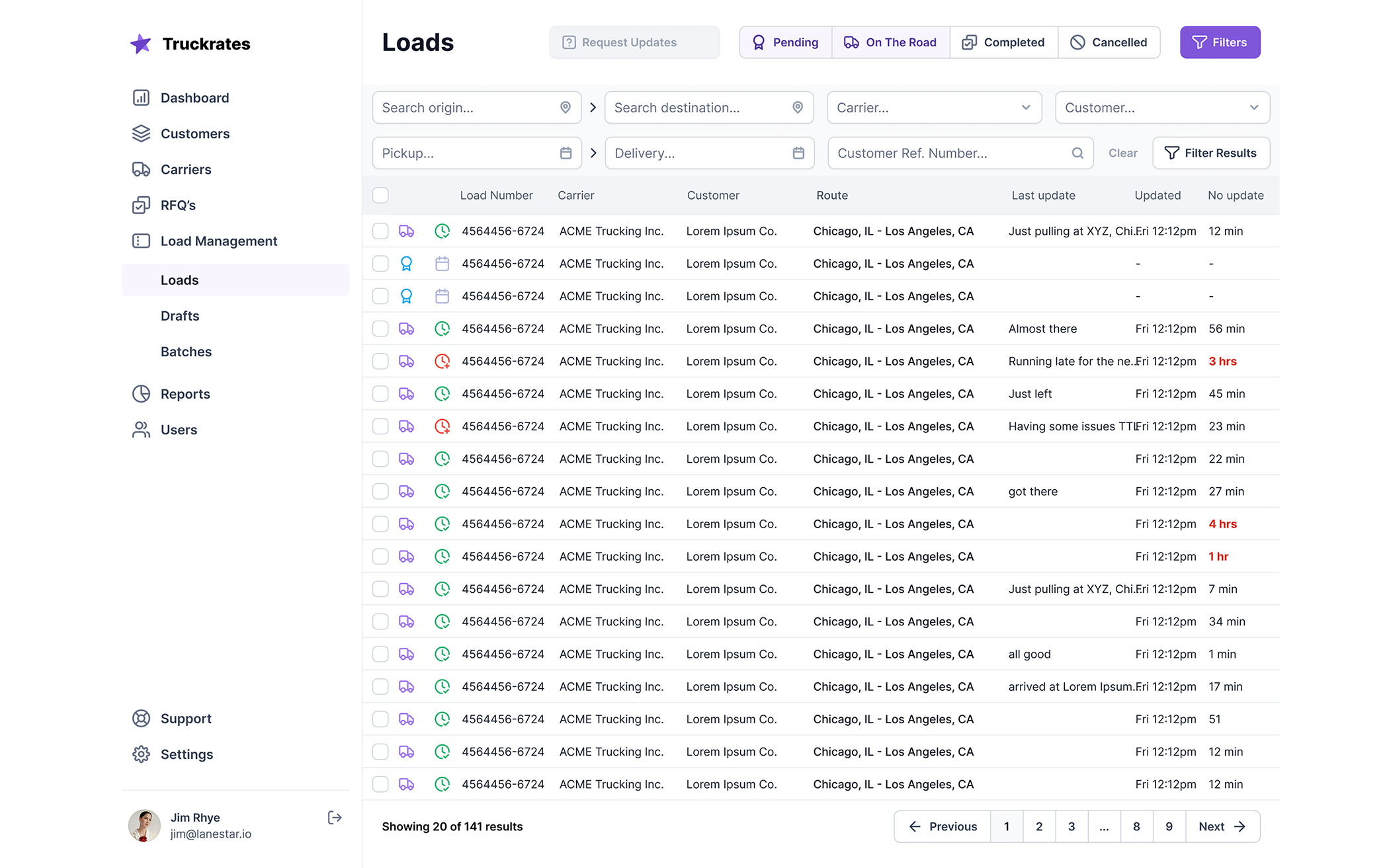
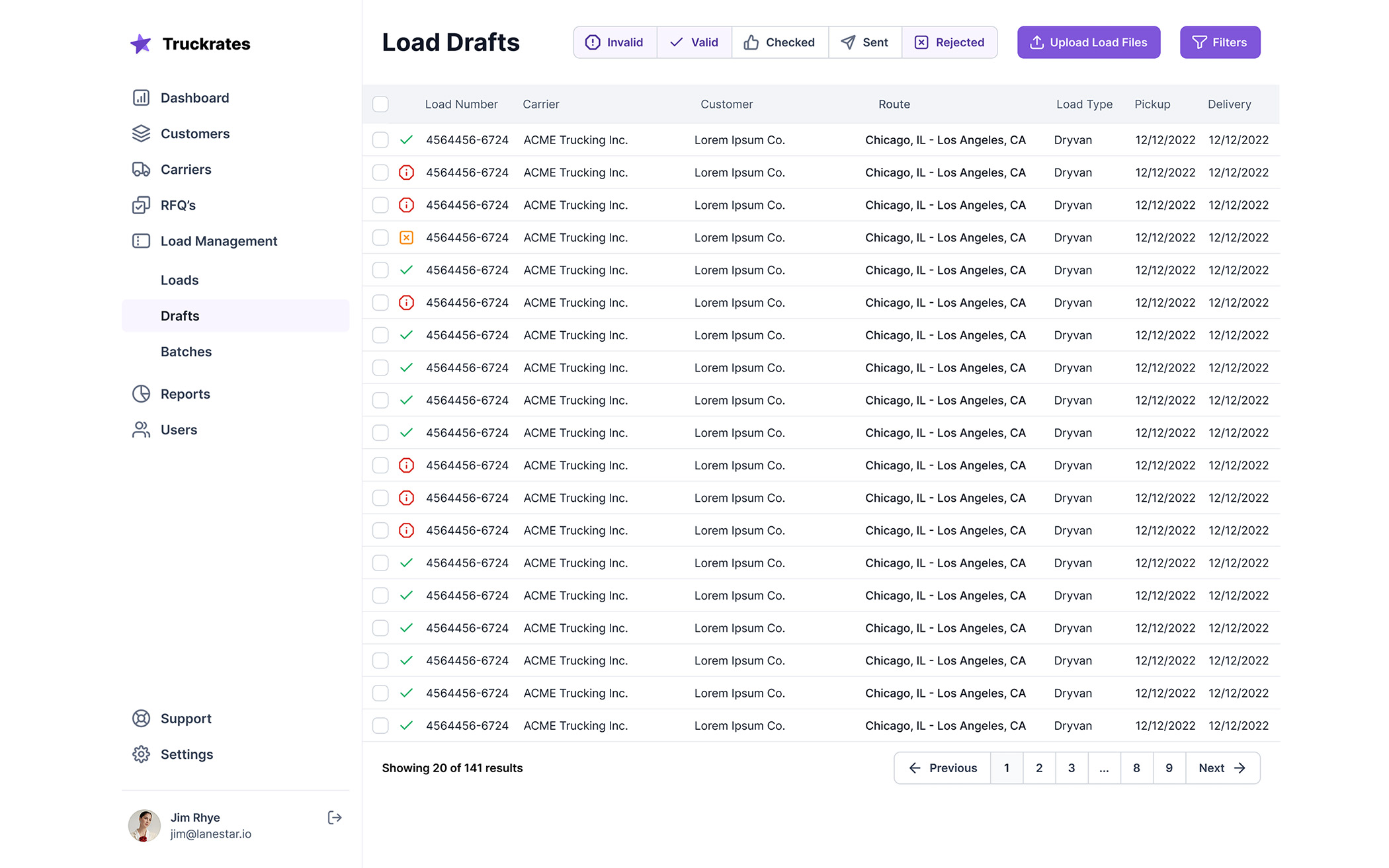
TruckRates — Management

A load's management panel with a live route map, a timestamped progress log, and a direct chat thread with the driver is shown inline along the full loads list.

1 / 4

Bringing the information needed to manage a load into one place instead of scattering it across tools and screens.

The management view combines the full load list with route progress, status history, driver communication and other operational information directly in context.

Fractional product design partner · 2021 — 2024

TruckRates grew out of a wider shift in the product from dispatch communication toward load management, pricing and cost calculation.

I helped translate that change into the product itself:

  • defining workflows for the new product direction
  • designing the information architecture and core management interfaces
  • extending the existing design language into a new application
  • designing workflows around tracking, quotes, rates and load management
  • helping shape a new LLM-assisted product while keeping interaction patterns coherent with the rest of the platform

This is the kind of work I particularly enjoy: taking a product that is changing underneath you and making the new complexity feel manageable to the people using it.

ProBidder

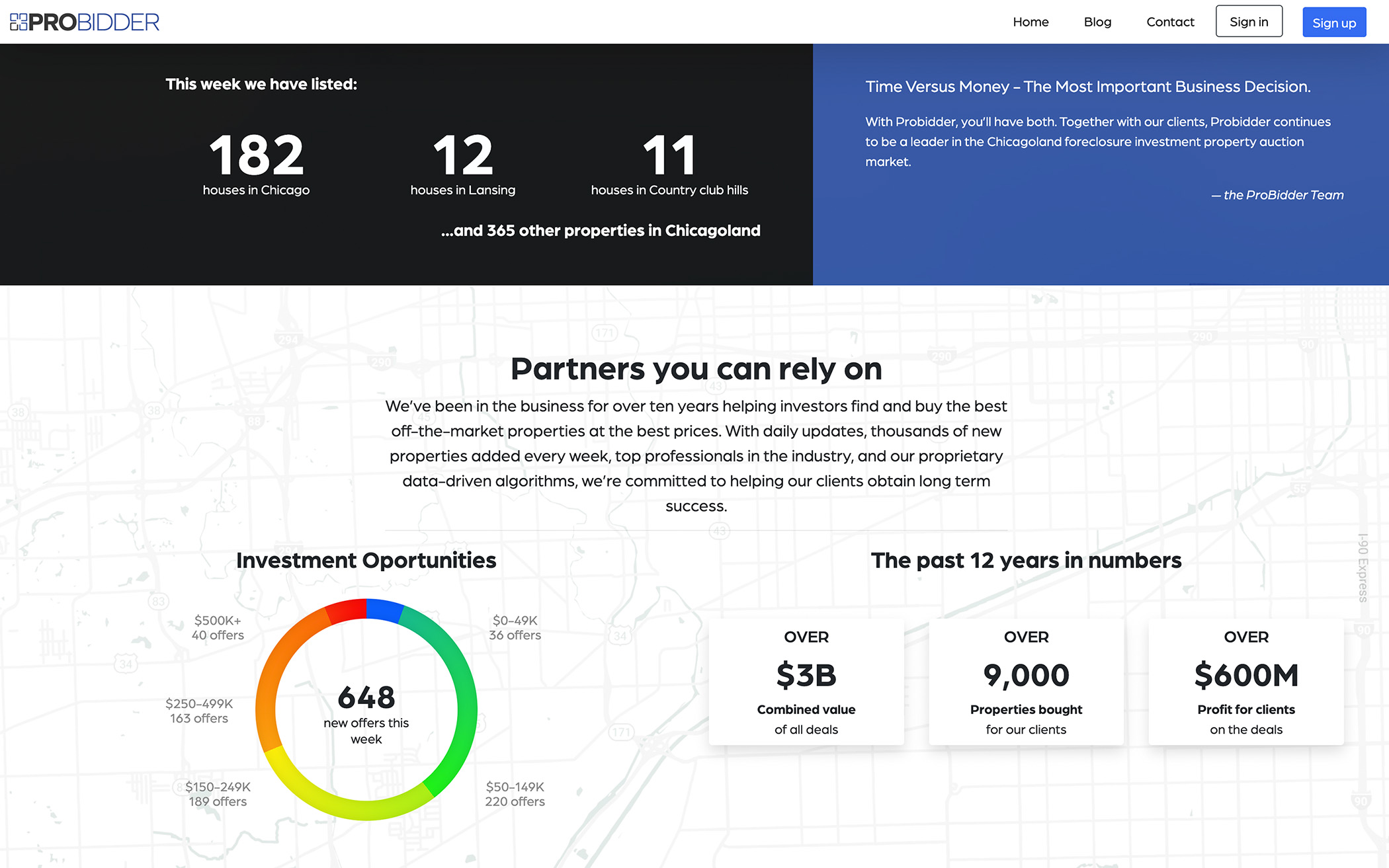
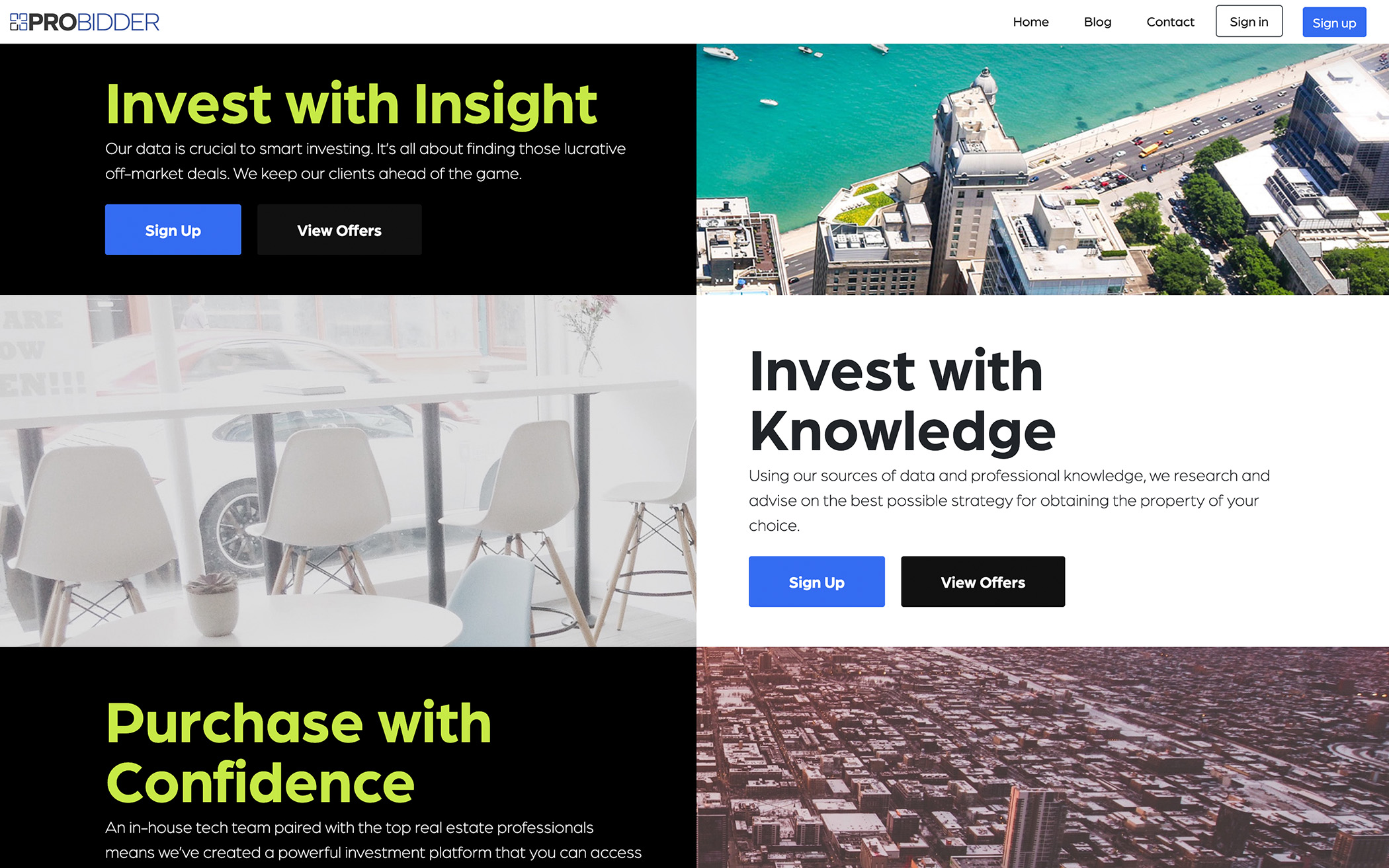
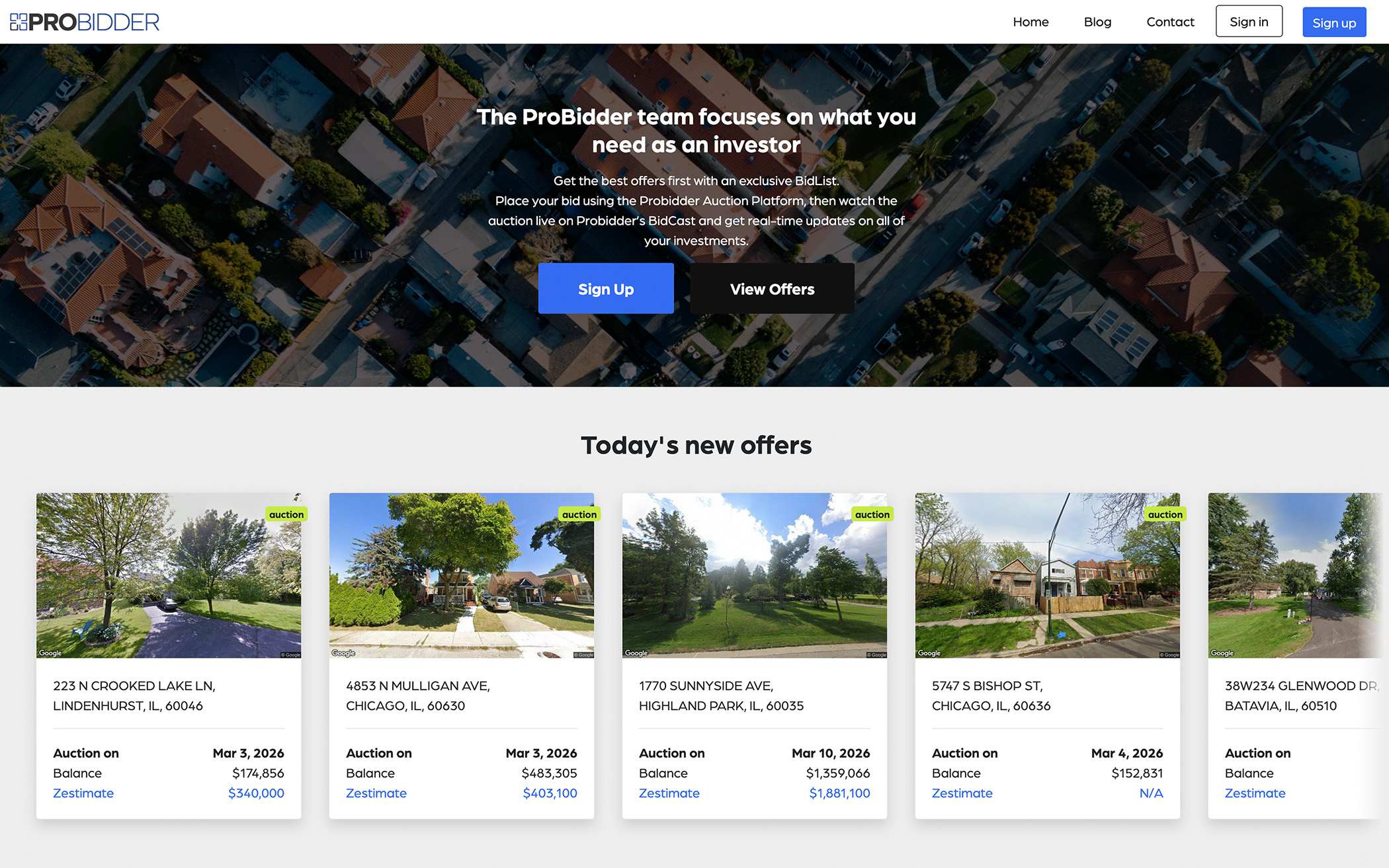
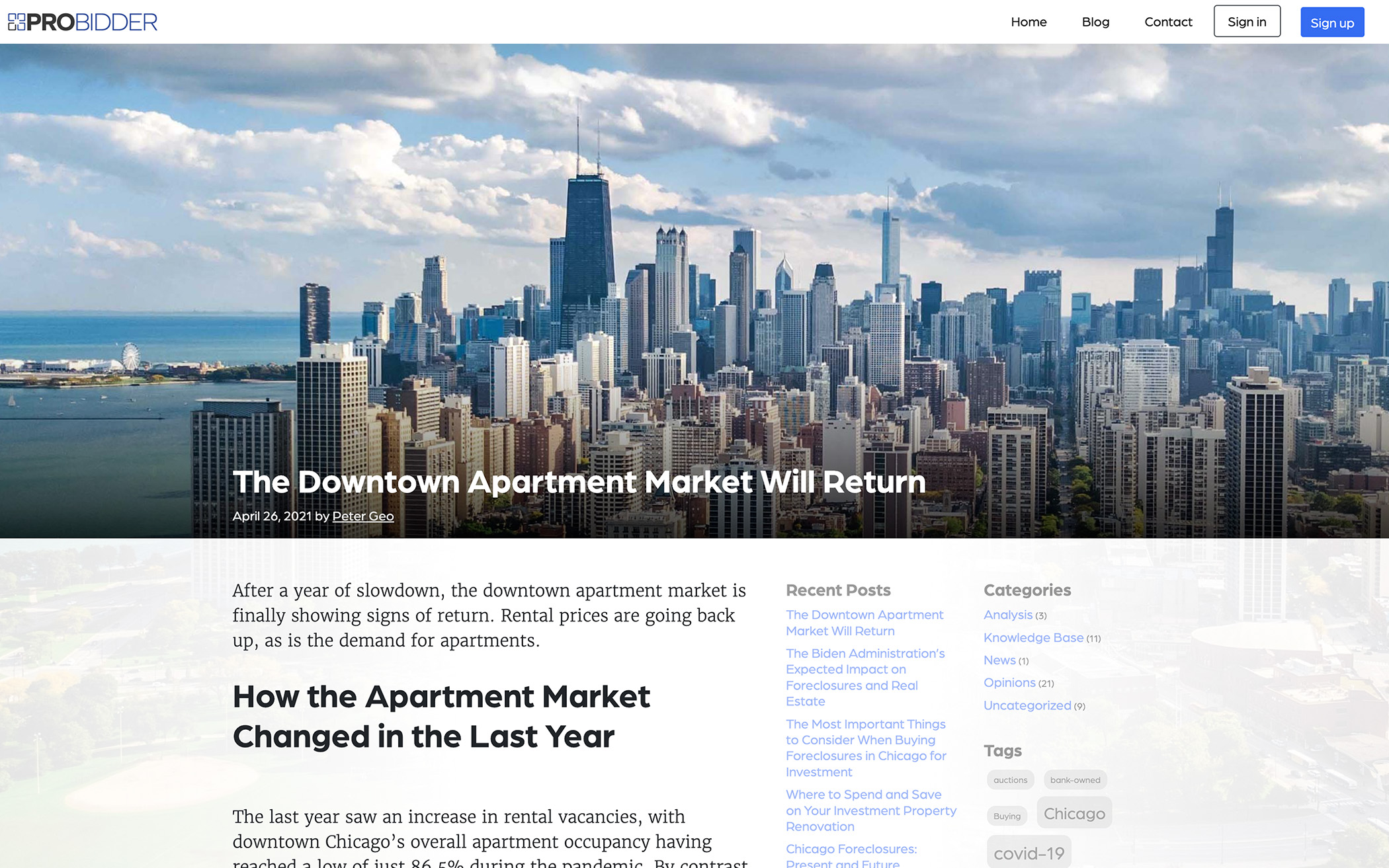
ProBidder — Website

Homepage hero with value proposition and primary CTA.

1 / 8

Taking a product from positioning and visual identity through interface design and into production code.

The public website was one part of a broader engagement covering SaaS products, real-estate applications and their customer-facing presentation.

Fractional design & frontend partner · 2018 — 2020

I worked across the boundary between product, design and engineering:

  • designed and prototyped complex SaaS and real-estate interfaces
  • contributed to product and feature decisions before implementation
  • worked directly with engineering on frontend functionality
  • created product identities and marketing interfaces
  • designed and implemented complete customer-facing websites

For a small team, that meant the same person could understand the product problem, design the interface and stay involved when it became working software.

What makes me think

This is my column for writing on what makes me think and hopefully make you think as well.
Follow me on LinkedIn for more...

AI, coding and everything else...
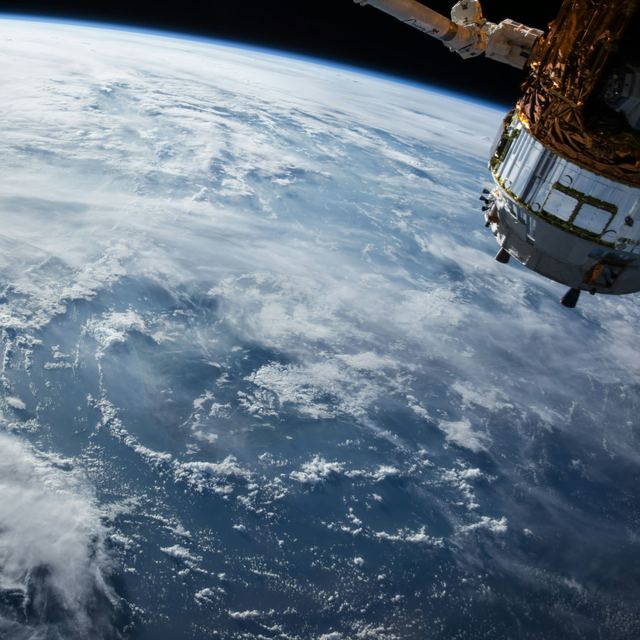
Earth seen from space with a satellite in the foreground

Did “The Hitchhiker’s Guide to the Galaxy” predict the evolution of software development? I think we, in our own wonderful tech bubble are living through what Douglas Adams described decades ago.

He wrote that there are three stages of every galactic civilization - the Survival, Inquiry and Sophistication phases, or How, Why and Where. He went on to characterize each phase with a question: “How can we eat?”, “Why do we eat?” and “Where shall we have lunch?”

And that progression can be quite an apt comparison to the history of software development.

Indeed, we started in the How phase of programming in the middle of the last century and stayed there for quite a while asking “How do we code this?”. Sometimes just for the sake of it! Programming languages had risen and then fallen into obscurity, engineering paradigms vied for dominance, trying to answer that question. It was a wild ride and some of us were quite lucky to be there for at least a part of it all!

Slowly but surely conventions settled and even though many frameworks continued to battle for relevance (and many still do), the Survival phase was giving way to the Inquiry phase. Companies and solo entrepreneurs started asking themselves “Why do we code this?”, spending a lot of resources on the discovery phase of projects, doing research on product-market fit and looking for unique selling points - the works! As the stakes got higher and development costlier, we started asking questions instead of building stuff for the sake of it.

Now after the rise of generative AI and more importantly - agentic AI we slammed shut the door to that decades long era. In just a couple of years we stormed into the Sophistication or “Where” phase of our progress! We no longer ask “Why implement this?” - we just do it and see what happens. With the ease of getting an app prototype done in minutes and refined in mere hours, we started asking “Where shall we find the audience for this?”.

But when launching a product is so easy (at least for someone proficient enough), this would surely mean SaaS is in a competitive bloody red ocean. Add the mass layoffs on top of that, and many engineers and designers now have the time and incentive to build something on their own - all of them stuck with the “Where” question…

Do they target a very small and specific niche solving its exact problem? Do they rely on personal flair and count on others to relate? Do they go local and put the product literally in the hands of businesses in their town? Or do they just shoot for the moon and hope to beat the big dogs?

So what is your answer to the “Where” question?

On decoration, desserts and being mindful

A piece of cake sitting on a white plate

For any designer adding the final layer of UI polish, of small details that give even the mundane accounting app a touch of personality, were for many years the dessert or the cup of coffee after a hearty meal.

After all the research, testing and data-driven decisions, we get to have that little stage on which we express our creativity…

If we could get to it at all. Too often product roadmaps drag us out of this and throw us right onto the next set of new features, before we could get to our dessert.

It’s been different in the past year or two however.

AI agents make adding visual fluff like micro-animations, delightful flourishes and fancy effect shaders easy and often even do them as a free bonus on top, without you even requesting them!

And they often look amazing, right?!

So amazing in fact, that we sometimes fail to see that one broken style guide convention, an odd process flow or a font use that’s not on brand. Turns out we now get a very finished looking UI that wows us but hides foundational design flaws and unintended (and that’s the important bit!) design inconsistencies - the stuff that makes the product feel wrong, rather than look wrong.

And this is actually a common pattern I have observed over the years while training novice designers. They often do the same (well… who am I kidding, we, experienced designers sometimes fall for that too!) - high on the rush of inspiration they start adding finishing touches to an interface thats still needs foundational work.

So it’s nothing new?

Au contraire!! The big difference is, this process used to take hours - time during which we ourselves or someone in the team could actually stop us, pull us back, get us on the right track. Now it’s “Here’s your finished UI!”, 47 seconds after you requested the design…

So an extra layer of maturity on our end is required now and a bit more intent when we prompt - explicitly stating the stage we are at and the fidelity of the work we expect to see generated. Just so we don’t get blinded by a flashy decorations layer.

In an odd turn of events, AI agents - those chaos-wrangling probability-crunching machines, require us to be more methodical and work in a more structured way! Or in other words - they make us eat our greens and in return, they eat our dessert for us. And I for one find this deeply ironic.

But let me know: Do you find yourself blinded by the extra layer of polish on top of unfinished interfaces or have you already built the resistance and you are seeing “through the matrix”?

On the embarrassment of riches

A pile of jewelry on a table

Vibe coding is truly giving product managers an embarrassment of riches… but is that a good thing?

Throughout our entire careers as product designers and engineers launching a new feature has been an event! It was a reason to celebrate (or hold our breath) as we see users interacting with it.

And there was a reason for that - teams had been working weeks or months to plan, design, implement and test that feature. It was their baby, which they would now see walk for the first time…

For product managers and upper leadership though it has always been a race. “We need to ship A, so we can move to B and then C!”

And now, finally thanks to AI agents, they can zip through the whole planned features list in a just few weeks, launching all those features the teams never had the time to get to. And some do just that. A 6000 line PR? No problem!

But what happens when the user loads the app in the morning? They feel like seeing a new app - elements have moved around to make room for new panels and actions, processes have changed… and that’s probably the third time this happened over the last month!

That’s a cognitive disaster from UX perspective!

So a long list of new features no longer equates to competitive advantage. The actual decision point has moved to how to pace it and where the real value for the client is.

All of this, of course, varies widely on the maturity of the product and the intended market. Some products require a gradual warmup to change while others may not be as affected by experiments and volatility.

And this is exactly where a good product person really shines and calm decisions matter the most.

Notice that I am not even commenting on how well those features are implemented in terms of UX and how much technical debt they may have incurred to the backend. I will talk about that in a separate post soon!

But for now: do you find this embarrassment of riches a good thing, bad, just different? Let me know!

Let's Talk!

We can have a thirty minutes free call. No pitch.

Tell me what you're building, where things stand, and what's in the way. I'll tell you what I'd tackle first — and if I can't help, I'll say so.